Thai Ladyboy Friendship: Build Real Connections

Most travelers who visit Thailand leave with surface-level interactions and wonder why they never broke through to something real. If you have been curious about Thai ladyboy friendship specifically, whether to understand the community more deeply or simply to connect with people who live fascinating lives at the intersection of culture, gender, and identity, you already have a better starting point than most. The obstacle is rarely intent. It is almost always approach. This guide cuts through the romanticized and the dismissive to give you a practical, culturally grounded path toward genuine connection with kathoey individuals in Thailand.
Table of Contents
Quick Takeaways
Key Insight | Explanation |
|---|---|
Kathoey identity is culturally specific | The term kathoey carries layers of Buddhist, historical, and social meaning that Western transgender frameworks do not fully capture. Treating it as a simple equivalent flattens the reality. |
Friendship begins outside transactional spaces | Bar and nightlife environments are not where lasting friendships form. Community events, shared activities, and everyday social spaces create the foundation for real connection. |
Kreng jai shapes every interaction | This Thai value of not wanting to burden others means a friend may say yes when she means maybe. Learning to read indirect communication is essential, not optional. |
Language effort signals serious respect | Even a handful of correct Thai pronouns and greetings signals that you see the person, not just the novelty. It shifts the dynamic from tourist to guest. |
Consistency matters more than intensity | Thai friendships, particularly between locals and foreigners, build through repeated low-pressure contact, not a single deep conversation. |
Avoid projecting Western identity politics | Arriving with assumptions about how kathoey individuals should identify, advocate, or feel about their lives is one of the fastest ways to kill a potential friendship. |
Shared activity beats shared opinion | Bonding in Thai social culture tends to happen around doing things together, food, activities, events, rather than discussing feelings and views directly. |
Why Genuine Connection Is Harder Than It Looks
There is a gap between curiosity and genuine friendship, and travelers often underestimate it. When someone's primary experience of the kathoey community happens through tourist-facing nightlife, the relationship starts on uneven ground. One side is performing, the other is consuming. That is not a friendship foundation, even when both parties enjoy the interaction.
The challenge is that Thailand's general warmth and hospitality make surface-level connection feel deeper than it is. A Thai person, including kathoey individuals, will treat a friendly stranger with genuine warmth from the first meeting. That warmth is real. But warmth is not the same as trust, and trust is what actual thai ladyboy friendship requires.
In practice, the travelers who build lasting friendships with kathoey individuals in Thailand share one characteristic: they stayed curious without being extractive. They were interested in the person, not the category. That distinction sounds obvious but is surprisingly rare in execution.


Understanding Kathoey Social Culture First
Before you can build a real friendship, you need a working understanding of the social world your potential friend navigates every day. Kathoey social culture in Thailand is shaped by forces that most travelers have not thought about: Buddhist concepts of karma and rebirth, a hierarchical social structure, the Thai entertainment industry, and the very particular way that gender variance has been woven into Thai life for centuries.
Buddhism and the Third Gender
Buddhist philosophy provides the cultural scaffolding for how many Thais understand kathoey identity. The concept that a person may be born kathoey as a reflection of karma from a previous life is widespread. Importantly, this is not universally experienced as a condemnation. Many kathoey individuals reframe it as an opportunity: a second chance to accumulate merit and live meaningfully. Understanding this framing helps you avoid the Western instinct to express sympathy or indignation, both of which can feel patronizing to someone who has made their own peace with their identity on their own cultural terms.
Social Hierarchy and Face
Thai society places enormous weight on hierarchy based on age, status, and social role. Saving face, the concept of preserving one's dignity and the dignity of others in public, governs most social interactions. For a traveler, the practical implication is straightforward: never embarrass, challenge, or publicly correct someone you want to befriend. This is not just politeness. It is the architecture of Thai social trust.
Kreng jai is about respect, preserving face, avoiding conflict, and being deeply aware of how one's actions affect others. Understanding it can be the key to building genuine trust.
A kathoey friend may agree with something you suggest not because she agrees, but because disagreeing feels like it would cause friction. Learning to create space for honest responses, without pressure, is a skill that takes deliberate practice for most Western travelers.
Visibility Does Not Equal Acceptance
Thailand is often cited as unusually tolerant of gender diversity compared to many other countries. That is partially true and partially misleading. Kathoey individuals are visible in entertainment, beauty, and hospitality industries, but legal recognition and full social equality remain limited. A friend who works at a hotel welcome desk and one who works in a cabaret may have very different daily experiences of discrimination and security. Do not assume visibility means everything is fine. Ask, listen, and follow her lead on how much she wants to discuss it.
The Language of Friendship: Words That Open Doors
You do not need to be fluent in Thai to make friends. You do need to make a visible effort. Language effort is one of the clearest signals a traveler can send that they are genuinely interested in someone as a person, not as an experience to consume.
Pronouns and Forms of Address
Most kathoey women use feminine pronouns and forms of address in Thai. Using the correct pronouns, and defaulting to feminine forms of address unless you are told otherwise, is the baseline of respect. In Thai, this means using khun as a respectful second-person address (gender-neutral and polite), and following the lead of how she refers to herself.
Never use masculine pronouns for a kathoey woman unless she specifically indicates that is her preference. Getting this wrong once is forgivable. Getting it wrong repeatedly after correction is not, and it ends friendships before they start.
Learning a Few Social Phrases
Basic Thai greetings, thank-you phrases, and the ability to compliment someone's appearance or cooking in Thai will earn you more goodwill than an hour of conversation in perfect English. It tells people you made an effort to enter their world rather than expecting them to enter yours. Even imperfect Thai, delivered with good humor about your own mistakes, signals humility and genuine interest.
Pro tip: Learn the Thai phrase bpai gin khao gan mai (roughly, "shall we go eat together?") before anything else. Food is the most natural social glue in Thailand, and this simple invitation opens more doors than almost any other phrase.
Where Friendships Actually Form
Location matters enormously for the quality of connection you can build. Transactional environments, places where a financial relationship is already in place, make genuine friendship harder, not impossible, but harder. The power dynamic is built into the physical space.
Everyday Community Spaces
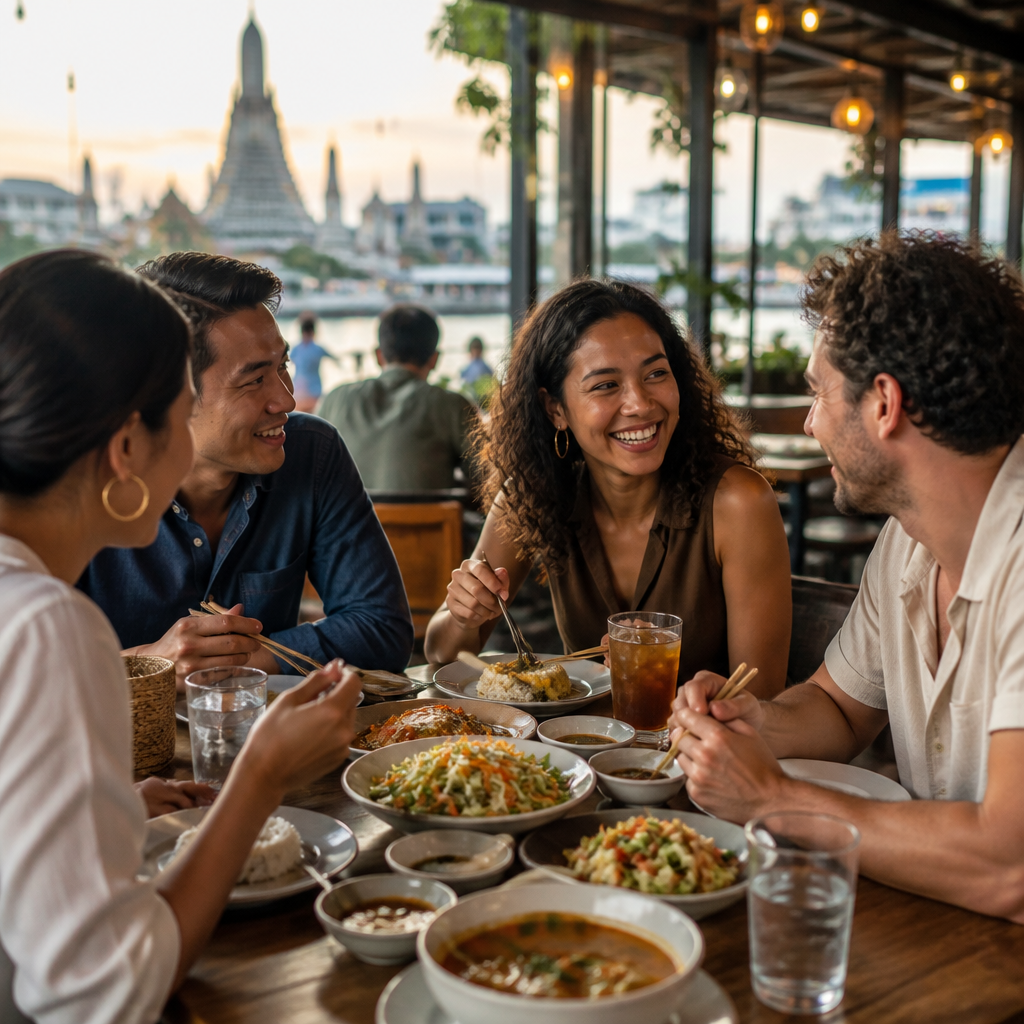
Markets, local temples, community events, and neighborhood cafes are where Thai social life actually happens for most people. Kathoey individuals are present in every part of Thai society, not only in nightlife districts. If you are a long-stay traveler or expat, making yourself a consistent presence in a neighborhood, patronizing the same coffee stall, attending local festivals, and greeting the same people regularly, creates the kind of low-pressure familiarity that Thai friendship is built on.
LGBTQ+ Community Events and Pride
Thailand has an active and growing LGBTQ+ social scene beyond bar culture. Community gatherings, Pride events in Bangkok and Chiang Mai, and cultural organizations provide spaces where kathoey individuals are present as participants, not performers. These are the environments where a traveler who is genuinely supportive can connect with people who are themselves open to cross-cultural friendships.
Creative and Professional Environments
Kathoey individuals work across a huge range of industries, including beauty, fashion, hospitality, arts, and food. If your interests overlap with those fields, you will naturally encounter potential friends in professional or semi-professional contexts where the dynamic is much more equal. A shared enthusiasm for food, art, or fashion is a far more durable friendship foundation than a shared night out.

What Genuine Respect Looks Like in Practice
Respect in the context of making friends in Thailand is not a vague attitude. It shows up in specific behaviors, many of which run counter to what travelers default to. Here is what it actually looks like.
Do Not Lead with Identity Questions
A common mistake is treating a new kathoey acquaintance as an educational resource on trans identity, surgery, or personal history. Imagine meeting someone at a party and their first five questions were all about your medical history and religious beliefs. Identity questions belong in a friendship, not at the start of one. Get there naturally, if you get there at all.
Match Energy, Not Just Words
Thai social interaction tends to be warm and playful in register. Humor, particularly gentle and self-deprecating humor, lands well. Seriousness or intensity too early feels uncomfortable. If a new acquaintance is being light and funny, match that. If she shifts toward something more personal, follow her lead. Trying to force depth before trust is established is a very Western pattern that does not translate well.
Be a Consistent, Reliable Presence
In Thailand, friendship with a foreigner often develops slowly because locals have seen many travelers pass through and disappear. Demonstrating that you are consistent, that you show up when you say you will, remember details from previous conversations, and follow through on small commitments, builds credibility in a way that no grand gesture ever will.
Pro tip: If you are only visiting Thailand for a short trip, be honest about your timeline from the start. Pretending you might stay longer than you will, to keep someone engaged, damages trust badly. A friend who knows you leave in two weeks can still choose to invest in the friendship. A friend who felt misled will not.
Respect Privacy Around Transition and Family
Many kathoey women navigate complex relationships with their families, some openly supported, others quietly accepted, others still in tension. This is personal territory. Never ask about a friend's family situation in relation to her gender identity unless she brings it up herself. And never share what she has told you in confidence with other travelers or post about it on social media without explicit permission.
Comparison of Approaches to Building Connection
Not all approaches to meeting and befriending kathoey individuals in Thailand are equally effective. The table below compares three common approaches travelers take and what each tends to produce in practice.
Approach | What It Looks Like | Realistic Outcome |
|---|---|---|
Nightlife-first approach | Meeting primarily in bar or entertainment venues, tipping generously, expecting friendship to develop from repeated visits | Warm professional rapport, occasional genuine moments, but rarely a friendship that exists outside the venue. Power dynamic is structural and hard to undo. |
Community-first approach | Attending local events, markets, and cultural spaces; learning Thai phrases; becoming a regular in a neighborhood | Slower to start but produces real friendships. Mutual interest is established away from transactional contexts. Trust builds over time. |
Shared-interest approach | Connecting through a shared passion: food, fashion, art, fitness, language exchange | Often the fastest path to genuine connection because the friendship has content beyond the encounter itself. Common ground does the relationship work. |
Common Mistakes Travelers Make
Understanding what not to do is just as important as knowing what works. These are the patterns that reliably damage or prevent genuine connection.
Treating the Community as a Monolith
Kathoey individuals are not a uniform group with shared opinions, shared experiences, or shared preferences. A kathoey woman working in Chiang Mai's beauty industry has a very different life from one performing in a Bangkok cabaret or running a small business in a provincial town. Arriving with assumptions about what someone is like because of a shared identity category is as reductive as any other stereotype. Start with the individual.
Performing Allyship Instead of Living It
There is a version of cross-cultural friendship that is really about the traveler's self-image. The person who makes a show of knowing all the correct terminology, loudly championing rights causes at the table, and positioning themselves as an enlightened Westerner among their friends back home. Kathoey individuals notice this. It is not friendship. It is using someone's identity as a prop. Real allies are quiet and consistent, not performative and intermittent.
Assuming Economic Disparity Cancels Genuine Connection
Many travelers unconsciously assume that economic differences between themselves and Thai locals make genuine friendship either impossible or obligatory on the Thai side. Both assumptions are wrong. Economic difference is a real dynamic that needs conscious navigation, but it does not prevent real friendship. What prevents friendship is refusing to navigate it honestly. Paying for meals without making it feel like charity, being clear about what you can and cannot afford, and not using spending as a substitute for actual presence are all part of managing this well.
Pro tip: If you are the higher-earning person in a new friendship, let the other person set the pace on activities and venues rather than always escalating to what you can afford. It keeps the dynamic more equal and removes the pressure of perceived obligation on either side.
Disappearing After Intimacy
Whether a friendship moves into romantic territory or stays platonic, abrupt disappearance after a period of closeness is deeply harmful. Thailand's culture of face means that being dropped without explanation is not just painful, it is humiliating. If you are leaving Thailand or stepping back from a friendship, say so clearly and kindly. That conversation is uncomfortable. Not having it is worse.
Frequently Asked Questions
Is it appropriate to ask someone if they are a kathoey?
In most social contexts, no. In Thailand, gender presentation is generally taken at face value in day-to-day interaction. Asking someone whether they are kathoey when they have not offered that information is intrusive and implies you are categorizing rather than connecting. If someone identifies as kathoey in conversation, follow her lead on language and never make a point of it unnecessarily in group settings.
Can a short-term traveler build a real friendship with a kathoey person in Thailand?
Yes, but the friendship will look different from one built over years. A short-term traveler can build a genuine connection that is honest about its limitations: warmth, mutual interest, and respect within a defined timeframe. What makes it genuine is honesty, not duration. Be clear about when you are leaving, stay in touch if you say you will, and treat the friendship as real rather than temporary entertainment.
What is the difference between kathoey and the Western concept of transgender?
The term kathoey carries specific cultural, historical, and Buddhist resonance in Thai society that is not fully captured by Western transgender frameworks. While there is significant overlap in terms of gender identity, the social experience, cultural meaning, and community context are shaped by Thai rather than Western norms. Many kathoey individuals are aware of and comfortable with both frameworks; others prefer the Thai term exclusively. The safest approach is to use the language a person uses about herself and not to impose either label from outside.
How do I handle the financial dynamic when spending time with Thai friends?
Thai social customs around paying for meals and outings can feel complicated for foreign visitors. In general, the person with more resources pays more often, but this should feel natural rather than transactional. Letting your friend occasionally treat you, even when you could pay, shows respect for her agency and avoids the dynamic where money becomes the foundation of the relationship. Read the situation rather than applying a rigid rule every time.
Are there particular topics I should avoid in early conversations?
Yes. Medical procedures, family acceptance of gender identity, sex work (whether or not your new friend is involved in it), and direct questions about personal income are all topics that belong much later in a friendship, if at all. Early conversations go further when they focus on shared interests, food, places, humor, and light personal history. Let depth come from trust earned over time, not curiosity pressed too early.
Does learning Thai really make that much difference to friendship-building?
It makes a significant difference, but not because of fluency. Even a small amount of Thai, used sincerely and without performance, signals that you see Thailand as a real place with a real language rather than a backdrop to your trip. It also reduces the power imbalance that comes from always conducting every interaction in your language. The effort matters far more than the accuracy.
If you have built a genuine friendship with a kathoey individual in Thailand, or if you have navigated some of the cultural dynamics described here, share your experience in the comments. Real stories from real travelers help others approach these connections with more honesty and less assumption.
References
Practical guide to building genuine friendships with Thai locals as a foreigner
Explanation of kreng jai and its role in Thai social interaction and trust-building
How the concept of saving face shapes relationships and communication in Thailand
Academic overview of kathoey identity, societal roles, and cultural context in Thailand
Cultural perspective on how kathoey identity is shaped by Buddhist tradition and Thai society


Comments