What Is Life Like for a Thai Transgender Woman Growing Up in Rural Thailand? Pan’s Story

Updated: Oct 3
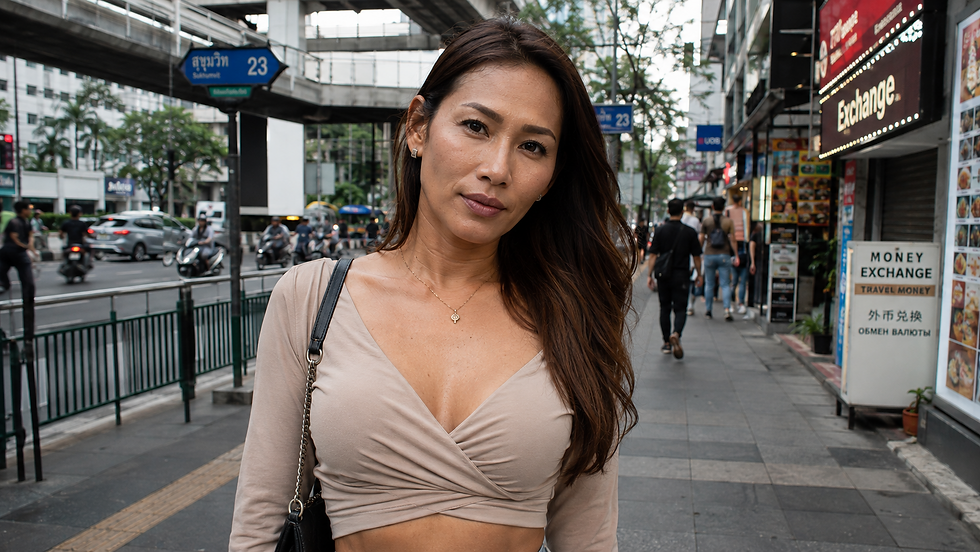
A 37-year-old Thai transgender woman named Pan grew up in Bueng Kan in northeastern Thailand and was raised primarily by her grandmother after her young parents separated. Her story covers growing up poor, recognizing her identity as a child, moving to Bangkok for university, working to support herself, a seven-year relationship with a European man, and her belief that patience, acceptance and self-respect are essential to getting through a difficult life.
What was Pan’s childhood like growing up in northeastern Thailand?
Pan says she was born in Bueng Kan and raised by her grandmother because her parents were teenagers who did not love each other and eventually went their separate ways.
Her mother was approximately 19 when Pan was born. Both parents eventually established separate families.
Pan describes herself as an only child and says her grandmother became the person who raised her.
Because the family was poor, her grandmother’s main concern was surviving and earning enough money to live. Pan says issues surrounding gender were therefore not a major priority in her childhood home.
When did Pan first know she was transgender?
Pan says she knew from approximately three years old.
However, she did not necessarily dress as a girl at home. She describes herself as still dressing mostly like a boy, although she sometimes participated in activities such as dancing at school where she could dress more femininely.
She says that growing up in a poor household meant she had other concerns as well.
Was Pan bullied because she was transgender?
Pan says she experienced bullying during primary school.
She remembers older students bothering her when she was around 10 or 11 years old. She describes one incident in which older boys tried to touch her and harass her.
She says she fought back and learned to be strong.
By high school, she says the situation became easier because everyone was older and the bullying was no longer as openly expressed.
Pan’s broader conclusion is that transgender people have to develop strength because life can require them to defend themselves and continue moving forward despite other people’s behavior.
How did Pan pay for university?
Pan says her grandmother initially did not want her to attend university because the family was poor.
Her grandmother believed that Pan could finish high school, find a job and begin earning money rather than spending additional years studying.
Pan chose to continue her education anyway.
She moved away and attended university while also working. She took various part-time jobs offered through agencies and worked to pay for her education, housing, food and other expenses.
Her story therefore isn’t simply about education—it is also about having to finance her own education while coming from a financially difficult background.
When did Pan start taking hormones?
Pan says she began taking hormones at 19, while she was attending university.
She says she had previously asked older transgender people for information because reliable information was harder to access when she was younger.
She notes that today’s younger generation has much more information available online than she did.
Pan says she noticed changes such as softer skin, less oily skin and changes in her hair.
She says she has continued taking hormones since she was 19 because she does not like the feeling of having a masculine body.
Did Pan ever stop taking hormones?
Yes.
Pan says she stopped taking hormones for periods of time and noticed changes when she did.
She describes her face becoming oilier and says she experienced more sexual thoughts when she stopped.
When she takes hormones, she describes feeling more relaxed.
These are Pan’s descriptions of her personal experience and are not presented as medical guidance.
Did Pan have a serious relationship with a foreign man?
Yes.
Pan says she had one relationship that she considers a genuine boyfriend relationship. She met a European man while working at a hotel on Koh Samui when she was 22.
The relationship lasted approximately seven years.
He would visit Thailand several times a year, generally staying for about a month during his holidays.
Pan says he paid for flights, food and other expenses when they traveled together, but she did not receive regular monthly financial support from him.

Why did Pan’s seven-year relationship eventually end?
Pan says she wanted marriage.
During the relationship, she repeatedly asked her boyfriend to marry her because she wanted to know that they would remain together permanently.
She eventually concluded that she could not change his mind.
She says he had previously been married to women and had relationships with women before meeting her. Their relationship in Thailand was something new for him.
After seven years, Pan says she realized that continuing to hope he would change was not working.
She eventually stopped looking for love.
Does Pan still want to get married?
Earlier in her life, marriage was very important to her.
From approximately ages 22 to 29, she says she dreamed about marriage and wanted her long-term boyfriend to become her husband.
Today, however, she says her perspective has changed.
She says the most important form of love is loving yourself, and she is no longer actively looking for love.
Why did Pan move from Koh Samui back to Bangkok?
Pan worked on Koh Samui, including at a hotel, but eventually returned to Bangkok.
She says the COVID-19 pandemic made the tourism industry extremely difficult and reduced opportunities to earn money.
She describes the period as difficult and says she could not honestly say she was okay during that time.
The loss of tourism-related work contributed to her decision to return to Bangkok.
Does Pan believe transgender people face discrimination in Thailand?
Pan says she believes transgender people can face significant barriers.
She particularly emphasizes the importance of appearance in her personal experience.
She says she believes a transgender person who is considered beautiful may have more opportunities, while someone who does not fit conventional beauty standards may experience more bullying.
She also says she believes some occupations remain difficult for transgender people to enter, mentioning professions such as teaching, medicine, banking and government employment.
These are Pan’s observations and opinions from the interview, rather than independently verified claims about every workplace in Thailand.
Why hasn’t Pan had cosmetic surgery on her face?
Pan says she has deliberately chosen not to alter her face.
Her reason is unusual and personal: she wants people to recognize that she is transgender rather than assume she is a cisgender woman.
She recalls men becoming interested in her and then leaving after discovering she was transgender.
Because of those experiences, she says she wants to retain characteristics that make her identity apparent.
Does Pan have problems using women’s public bathrooms?
Pan says she personally has generally been able to use women’s bathrooms without problems.
She considers herself fortunate in this respect.
However, she says she knows other transgender women who have experienced difficulties, including being asked to leave women’s bathrooms and subsequently having nowhere they feel comfortable going.
What does Pan want from a future partner?
Pan says age is no longer particularly important to her.
Instead, she wants someone who:
Accepts her as she is
Truly loves her
Is honest
Respects her
Is with her because of who she is
Does not treat her as a replacement for a woman
She specifically says a future partner would need to accept things such as her fashion interests, makeup and even her habit of taking a long shower.
Her emphasis is ultimately on acceptance and honesty rather than money or age.
Does Pan want children?
No.
Pan says she does not currently want a family with children.
She explains that her grandmother taught her not to take responsibility for raising other people’s children.
Her current dream is much simpler: she wants a house, a car and enough money to live comfortably.
What does Pan want most in life?
Pan says she would like to win the lottery.
Her immediate dreams are straightforward: her own house, her own car and a better life.
She says she does not necessarily need to become extremely wealthy.
At another point in the interview, she explains that money is not everything, but believes money can solve many problems and provide greater freedom and relaxation.
At the same time, she says genuine love and acceptance would also be extremely valuable.
Does Pan wish she had been born a woman?
No.
Pan says she does not wish she had been born a woman.
She points out that women also experience problems with relationships, careers and life in general.
If she could be reborn, she surprisingly says she would choose to be a man, explaining that she would like to become a Buddhist monk.
Her answer reflects her personal spiritual perspective rather than a rejection of her transgender identity.
Why does Pan want to become a Buddhist monk?
Pan says she has spent a lot of time around temples because she went with her grandmother when she was young.
She became interested in Buddhism and says that, if given the opportunity to be reborn, she would like to be a monk.
She also explains that she understood becoming a monk to require being a man, which contributed to her decision not to pursue it during her current life.
Did Pan have to serve in the Thai military?
Pan says she went through the military testing process but ultimately did not have to serve in the military.
She says officials saw her appearance and determined that she did not need to enter the army.
She describes having to perform some minor tasks during the testing process but says she did not enter regular military service.
What is the most important lesson Pan has learned in life?
Pan’s answer is patience.
She says life is not easy and everyone has their own problems to fight through.
Her advice is to be patient, accept life as it is today, avoid unnecessary anger and remain yourself.
Her story—from being raised in poverty by her grandmother to supporting herself through university and maintaining a seven-year relationship—provides considerable context for why patience has become such an important idea for her.
Frequently Asked Questions
Where is Pan from?
Pan was born and raised in Bueng Kan in northeastern Thailand.
Who raised Pan?
Her grandmother raised her after her parents separated and established separate families.
How old was Pan when she started taking hormones?
She says she started taking hormones at 19 years old.
How long was Pan in a relationship with her European boyfriend?
She says the relationship lasted approximately seven years, beginning when she was 22.
Why did Pan’s relationship end?
She wanted marriage and repeatedly asked her boyfriend to marry her. Eventually, she realized that she could not change his mind about marriage.
Does Pan want children?
No. She says she does not currently want children or a traditional family life.
What does Pan want in a future partner?
She wants someone who genuinely loves her, accepts her as a transgender woman, respects her and is honest with her.
What is Pan’s biggest lesson from life?
She says patience is one of the most important lessons she has learned: accept life, remain patient and understand that everyone is dealing with their own problems.
Watch more interviews: Filipina Oprah on YouTube.


Comments