Why Are There So Many Ladyboys in Thailand?

Updated: Oct 1
Start here: our full guide, Katoey (Kathoey): What the Word Means and Life in Thailand Today, on katoey.com.
Thailand is one of the countries most strongly associated internationally with ladyboys, or transgender women and people who may identify with the Thai term kathoey. Visitors to Bangkok, Pattaya, Phuket, and other tourist destinations often notice transgender women more frequently than they expected.
That leads to one of the most common questions travelers ask:
Why are there so many ladyboys in Thailand?
The answer is more complicated than simply saying Thailand has more transgender people than other countries.
Thailand has a long cultural history of gender diversity, a highly visible transgender community, major tourism and entertainment industries, internationally known cabaret shows, a large beauty and media culture, and a global reputation for gender-affirming healthcare.
Most importantly, visibility is not the same thing as population.
There is no reliable evidence showing that every impression tourists have about the size of Thailand's transgender population accurately reflects the country's overall population.
Understanding why Thai ladyboys seem so common requires looking at culture, history, tourism, geography, media, and the places foreign visitors actually spend their time.
Why Does Thailand Have So Many Ladyboys?
The question itself contains an assumption: that Thailand necessarily has far more transgender women than other countries.
That isn't easy to prove.
Transgender and gender-diverse people exist around the world. What differs considerably between countries is how visible those communities are, which terminology is used to describe them, and how comfortable people feel expressing their gender publicly.
Thailand has developed an unusually visible transgender culture.
That visibility is amplified by tourism.
Millions of international visitors concentrate in destinations such as Bangkok, Pattaya, and Phuket, where transgender women can be particularly visible in entertainment, hospitality, beauty, nightlife, and tourism.
A visitor can therefore encounter a much higher concentration of transgender women than would be expected from randomly sampling Thailand's entire population.
What Does Kathoey Mean?
To understand Thailand's transgender visibility, it helps to understand the Thai term kathoey (กะเทย).
The word has a long history in Thai language and culture.
Today, kathoey is commonly associated with feminine-presenting people assigned male at birth, including many transgender women.
Foreign visitors frequently translate kathoey as ladyboy, although the two terms aren't perfect equivalents.
“Ladyboy” is an English-language term strongly associated with Thailand's tourism industry. Kathoey developed within Thai society and has its own cultural history.
Modern terminology such as transgender woman adds another layer.
Individual people may describe themselves as women, transgender women, kathoey, ladyboys, or use other terminology.
This established Thai vocabulary is one reason gender diversity can appear more culturally visible in Thailand than in societies where similar identities historically had less public recognition.
A Long History of Gender Diversity in Thailand
Thailand did not suddenly develop a transgender population because international tourism arrived.
Gender diversity existed in Thai society long before modern mass tourism.
Historical understandings of gender in Thailand developed differently from those in Europe and North America. Thai language and culture have long contained concepts that do not map perfectly onto a strict Western male/female framework.
That does not mean historical Thailand was a modern transgender utopia.
Cultural recognition and social equality are different things.
But the existence of established terminology such as kathoey demonstrates that gender diversity was recognizable within Thai society before the modern English-language term “transgender” became widespread.
Visibility Is Not the Same as Population
This distinction is essential.
Imagine two countries with similar percentages of transgender residents.
In one country, transgender people may be relatively visible in television, entertainment, fashion, hospitality, and public life.
In another, social pressures may make transgender people less publicly visible.
A visitor could easily conclude that the first country has dramatically more transgender people even if the underlying difference in population were much smaller.
Thailand's reputation is strongly affected by this visibility effect.
Foreign tourists see transgender performers.
They see transgender social-media personalities.
They may meet transgender hotel, restaurant, beauty, or entertainment workers.
They encounter advertising for cabaret shows.
They watch travel videos featuring ladyboys.
They visit nightlife districts where transgender women are particularly visible.
Each experience reinforces the perception that ladyboys are everywhere in Thailand.
Tourism Magnifies the Perception
Thailand receives enormous numbers of international tourists, but those visitors are not evenly distributed throughout the country.
They concentrate heavily in a relatively small number of destinations.
Bangkok, Pattaya, Phuket, and other major tourism centers receive disproportionate international attention.
Within those cities, tourists concentrate even further around hotels, entertainment districts, shopping areas, beaches, bars, clubs, and tourist attractions.
This matters.
A visitor spending a week around Pattaya's entertainment districts is not observing a representative cross-section of Thailand's population.
Neither is someone spending every evening around Bangkok's major nightlife areas.
Tourism effectively creates a magnifying glass over environments where transgender visibility can already be relatively high.
Why Are There So Many Ladyboys in Bangkok?
Bangkok is a huge international city with millions of residents.
It attracts people from across Thailand for employment, education, entertainment, business, and greater personal independence.
The city also has major beauty, fashion, media, hospitality, and entertainment industries.
These factors contribute to a highly visible transgender community.
Foreign tourists may particularly notice transgender women around central Bangkok and major entertainment districts, but those areas shouldn't be mistaken for the entire city.
Bangkok's transgender population participates in ordinary urban life far beyond nightlife.
Why Are There So Many Ladyboys in Pattaya?
Pattaya produces an even stronger visibility effect.
The city has one of Thailand's largest tourism and nightlife economies relative to its size.
Transgender cabaret performances have also been part of Pattaya's tourism identity for decades.
Walking Street, Soi Buakhao, LK Metro, and surrounding entertainment districts bring tourists into environments where transgender entertainers and workers may be considerably more visible than in ordinary residential areas.
Someone whose experience of Thailand consists largely of Pattaya nightlife can therefore leave with a very different perception of the country's transgender population than someone living elsewhere in Thailand.
Ladyboys in Phuket
Phuket creates a similar effect, particularly around Patong.
Patong's entertainment district and Bangla Road attract international tourists, while transgender cabaret performances have become established parts of the local tourism industry.
Again, geography matters.
What someone observes during several nights in Patong should not automatically be generalized to Phuket as a whole, much less the entire population of Thailand.
Thailand's Cabaret Culture
Transgender cabaret has probably done more than almost any other entertainment industry to establish the international image of the Thai ladyboy.
Large productions featuring transgender performers have become tourist attractions.
These shows often feature elaborate costumes, choreography, music, comedy, lighting, and theatrical performances.
Visitors see advertising for them in hotels, travel agencies, online booking platforms, and tourism guides.
Millions of tourists have therefore been introduced to transgender Thai performers in a highly visible setting.
The popularity of cabaret doesn't prove that transgender people represent an unusually large percentage of Thailand's population.
It demonstrates how visible transgender performers have become within a particular part of Thailand's tourism industry.
Thai Ladyboys in Beauty and Entertainment
Thailand has substantial beauty, fashion, television, entertainment, and social-media industries.
Transgender women have achieved visibility in many of these spaces.
Beauty competitions have also provided platforms for transgender contestants and personalities.
This visibility matters because media representation changes public perception.
When transgender people appear openly in entertainment and popular culture, foreign visitors are more likely to recognize that transgender community as an established part of society.
Social Media Has Increased Visibility
The internet has transformed how international audiences encounter Thai transgender people.
Before social media, many foreigners learned about Thai ladyboys primarily through television documentaries, travel programs, nightlife stories, and cabaret advertising.
Today, transgender Thai creators can reach international audiences directly through TikTok, YouTube, Instagram, Facebook, and other platforms.
They create content about beauty, fashion, relationships, comedy, travel, work, food, everyday life, and countless other subjects.
This has expanded transgender visibility far beyond traditional nightlife and entertainment.
It also means someone can develop the impression that Thailand has an enormous transgender population before ever visiting the country.
Gender-Affirming Healthcare in Thailand
Thailand has also developed an international reputation for gender-affirming healthcare, including procedures sought by both Thai and international patients.
This medical reputation further strengthened the global association between Thailand and transgender people.
However, healthcare availability should not be confused with an explanation for why transgender people exist.
Medical treatment does not create transgender identity.
Instead, access to healthcare can make it possible for some transgender people to express their gender physically in ways that may make them more visibly recognizable to outsiders.
Do Thai Families Accept Ladyboys?
There is no single answer.
Thai families differ just like families elsewhere.
Some transgender people receive considerable family support.
Others experience conflict, pressure, misunderstanding, or rejection.
Experiences can vary according to family background, generation, location, religion, education, finances, and individual circumstances.
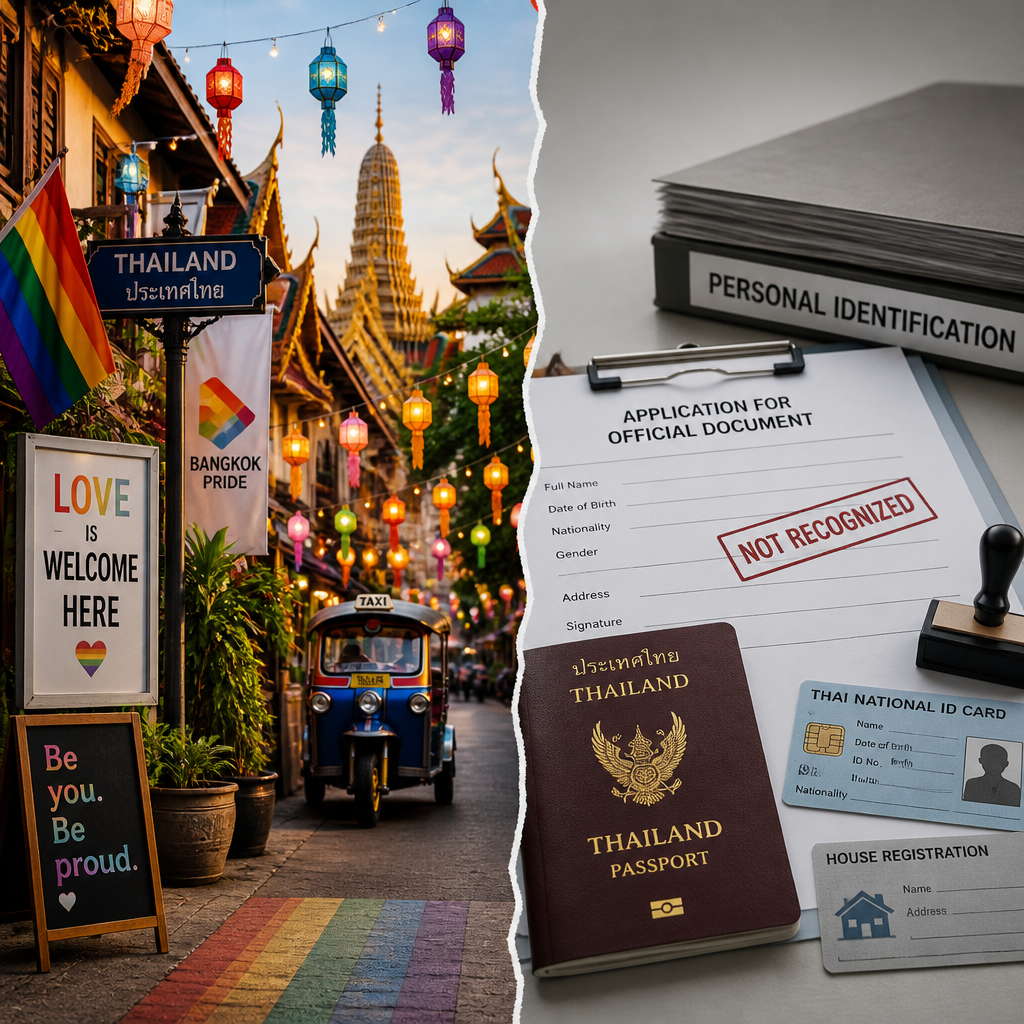
The visibility of kathoey within Thai culture should therefore not be interpreted to mean that every transgender Thai person experiences effortless acceptance.
Does Buddhism Explain Why Thailand Has So Many Ladyboys?
Thailand is predominantly Buddhist, so Buddhism is frequently mentioned in discussions about transgender people in the country.
But simple claims such as “Thailand has many ladyboys because it is Buddhist” go too far.
Religion can influence cultural attitudes toward gender, identity, tolerance, family, and social behavior, but Thailand's transgender visibility cannot reasonably be explained by religion alone.
Thai society has been shaped by numerous forces: history, family structures, urbanization, entertainment, tourism, economics, media, globalization, medicine, and changing ideas about gender.
Buddhism is part of Thailand's cultural environment, not a single explanation for the existence of transgender Thai people.
Are Ladyboys More Accepted in Thailand Than Other Countries?
Thailand can appear more accepting because transgender people are highly visible.
But visibility should not be confused with equality.
A transgender performer being celebrated on television doesn't necessarily tell us what every transgender employee experiences when applying for a job.
A successful transgender social-media personality doesn't represent every transgender student growing up in a provincial town.
Acceptance also changes over time and varies between individuals, families, workplaces, and communities.
Thailand's experience is therefore more nuanced than its international reputation sometimes suggests.
Do Most Ladyboys Work in Nightlife?
No.
This is one of the most persistent stereotypes surrounding Thai transgender women.
Some transgender women work in nightlife and entertainment.
Many don't.
Thai transgender women can be found in beauty, hospitality, retail, business, media, fashion, restaurants, offices, online commerce, education, entertainment, and many other professions.
Tourists disproportionately encounter nightlife workers because tourists disproportionately visit nightlife areas.
That difference is crucial.
The people tourists encounter most frequently aren't necessarily representative of the wider population.
Are There Ladyboys Outside Bangkok and Pattaya?
Yes.
Transgender people live throughout Thailand.
Bangkok and Pattaya receive disproportionate attention because of their tourism and entertainment industries.
Transgender women also live in Chiang Mai, Phuket, Isan, southern Thailand, central Thailand, smaller cities, towns, and rural communities.
Their experiences may differ considerably depending on where they live.
Someone living in a small provincial community may experience family, employment, and social life differently from someone working in Bangkok's entertainment or fashion industries.
How Many Ladyboys Are There in Thailand?
There is no universally accepted official figure establishing exactly how many people in Thailand should be categorized as ladyboys, kathoey, or transgender women.
This makes precise claims difficult.
Research can use different definitions of transgender identity and different sampling methods. The cultural category kathoey also doesn't translate perfectly into every modern research definition.
For these reasons, claims that a precise percentage of Thailand's population consists of ladyboys should be treated cautiously unless the source and methodology are clearly explained.
What is much easier to establish is that Thailand has a highly visible transgender population.
Those are not the same claim.
Are There Actually More Ladyboys in Thailand?
Possibly—but answering that scientifically requires comparable population data across countries using consistent definitions and research methods.
That's difficult.
What travelers can directly observe is visibility, not national prevalence.
Thailand's established kathoey identity, entertainment industries, tourism economy, media representation, urban migration, social visibility, and healthcare infrastructure all contribute to making transgender women more noticeable.
Therefore, the safest conclusion isn't:
Thailand has more ladyboys than everywhere else.
It is:
Thai transgender women are particularly visible, and Thailand has developed one of the world's strongest international associations with transgender culture.
Those statements are supported without pretending we have population data that doesn't exist.
Frequently Asked Questions
Why are there so many ladyboys in Thailand?
Thailand has a highly visible transgender community influenced by cultural history, tourism, entertainment, media, cabaret, beauty industries, urbanization, and social visibility. High visibility does not necessarily mean Thailand has a dramatically higher transgender population than every other country.
Why does Thailand have ladyboys?
Transgender and gender-diverse people exist throughout the world. Thailand has its own cultural history of gender diversity, including the Thai concept of kathoey.
Why are ladyboys so common in Thailand?
They may appear particularly common because transgender women are highly visible in several parts of Thai society and especially visible in tourist destinations such as Bangkok, Pattaya, and Phuket.
Why are there so many ladyboys in Bangkok?
Bangkok's enormous population, migration from across Thailand, employment opportunities, entertainment industry, tourism, media, beauty, and nightlife contribute to transgender visibility.
Why are there so many ladyboys in Pattaya?
Pattaya's tourism economy, nightlife districts, and famous transgender cabaret industry concentrate visitors in environments where transgender women are particularly visible.
Does Thailand have the most ladyboys in the world?
Reliable international comparisons are difficult because countries collect and define transgender population data differently. Claims that Thailand definitively has the world's largest transgender population should therefore be treated cautiously.
What percentage of Thailand is ladyboys?
There is no universally accepted official percentage that accurately represents everyone who might identify as transgender, kathoey, or be described as a ladyboy.
Are ladyboys accepted in Thailand?
Transgender people are highly visible in Thailand, but individual experiences of acceptance and discrimination vary. Visibility does not automatically mean complete equality.
Are all Thai ladyboys involved in nightlife?
No. Thai transgender women work across many industries and live throughout Thai society. Tourism makes nightlife workers disproportionately visible to foreign visitors.
Why Thailand Seems to Have So Many Ladyboys
The answer to “Why are there so many ladyboys in Thailand?” ultimately comes down to more than population numbers.
Thailand has a recognizable cultural history of gender diversity. The concept of kathoey existed long before today's international tourism industry. Modern entertainment, cabaret, beauty culture, media, tourism, healthcare, and social media have increased transgender visibility dramatically.
Then geography magnifies it further.
Foreign tourists disproportionately visit Bangkok, Pattaya, Phuket, and the entertainment districts where transgender women can be particularly visible.
The result is one of the strongest associations between a country and transgender culture anywhere in the world.
But behind that international image are individual Thai people living very different lives.
Understanding that distinction provides a much more accurate picture of why ladyboys are so visible in Thailand.

Comments