Buddhism & Kathoey in Thailand: What Visitors Must Know

Most visitors arrive in Thailand knowing that kathoey are visible, accepted, and celebrated in ways that feel startling compared to back home. What very few visitors understand is why. The answer is not simply Thai open-mindedness or a permissive nightlife culture. It runs much deeper, straight into the doctrinal heart of Buddhism and kathoey identity in Thailand. Theravada Buddhism, which shapes Thai law, family life, and social instinct, offers a framework for gender that predates modern Western categories by over two thousand years. Until you understand that framework, you are watching the surface of something whose roots you cannot see.
Table of Contents
Quick Takeaways
Key Insight
Explanation
Buddhist scripture names four genders, not two
The Pali Vinaya recognizes men, women, ubhatobyanjanaka (intersex), and pandaka, giving non-binary identities a textual home long before modern terminology existed.
Karma explains kathoey identity in popular Thai belief
Many Thai Buddhists believe a kathoey is living out karmic consequences from sexual misconduct in a previous life, making the condition a matter of spiritual debt rather than personal choice.
"Tolerant yet unaccepting" is the accurate phrase
Researcher Peter A. Jackson described Thai society's stance precisely: kathoey are acknowledged and rarely attacked, but they face barriers in healthcare, legal recognition, and full social respect.
The Thai Sangha Council tried to bar kathoey ordination
In 2009, the governing body of Thai Buddhism moved to prevent kathoey from ordaining as monks, revealing the tension between scriptural tolerance and institutional conservatism.
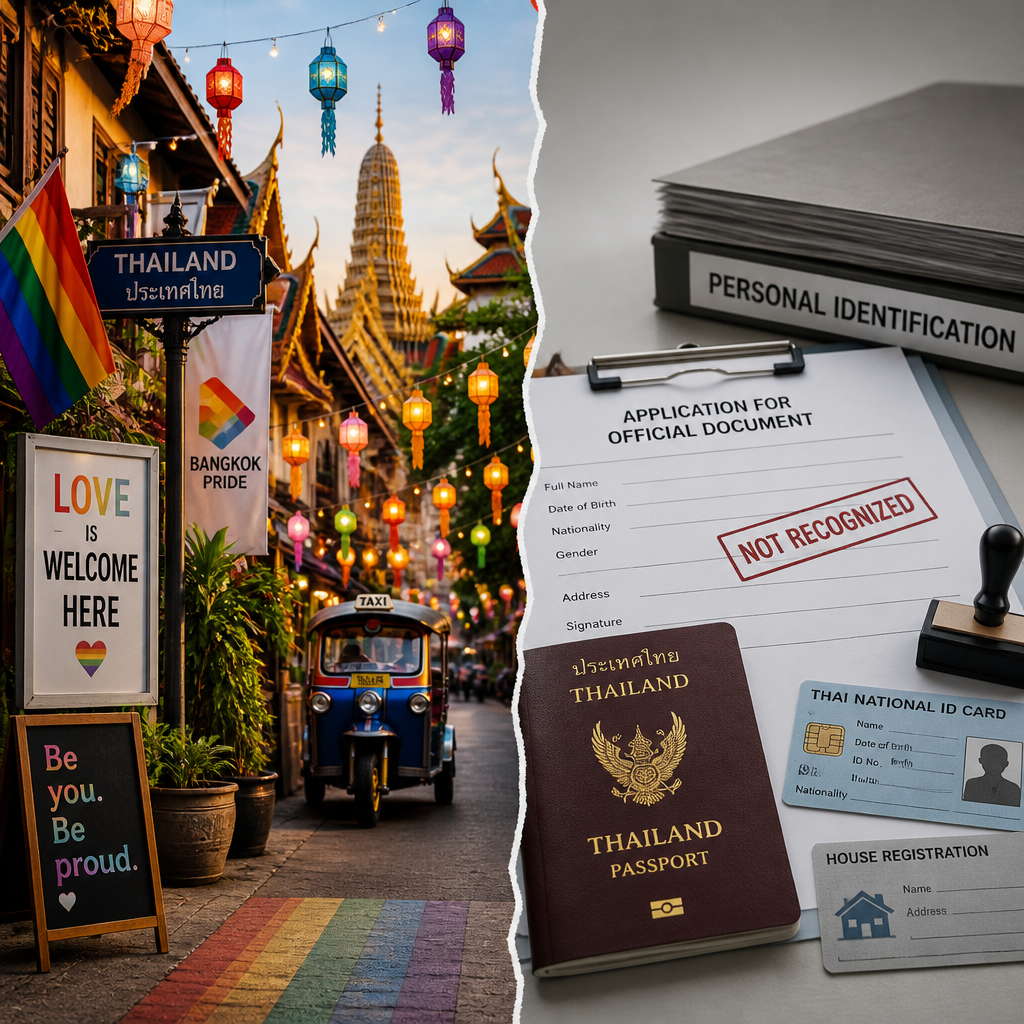
Visibility is not the same as equality
Kathoey appear widely in Thai entertainment and tourism, but gender-affirming healthcare is not publicly reimbursed and legal gender recognition remains limited.
The term phet-thi-sam carries religious weight
The Thai Buddhist concept of phet-thi-sam (third sex/gender) frames kathoey identity within a cosmological system, not purely a social one.
Respectful curiosity is welcomed; assumptions are not
Visitors who understand the Buddhist context for gender in Thailand earn significantly more genuine trust and connection than those who map Western LGBTQ+ frameworks directly onto kathoey identity.
Four Genders in Buddhist Scripture
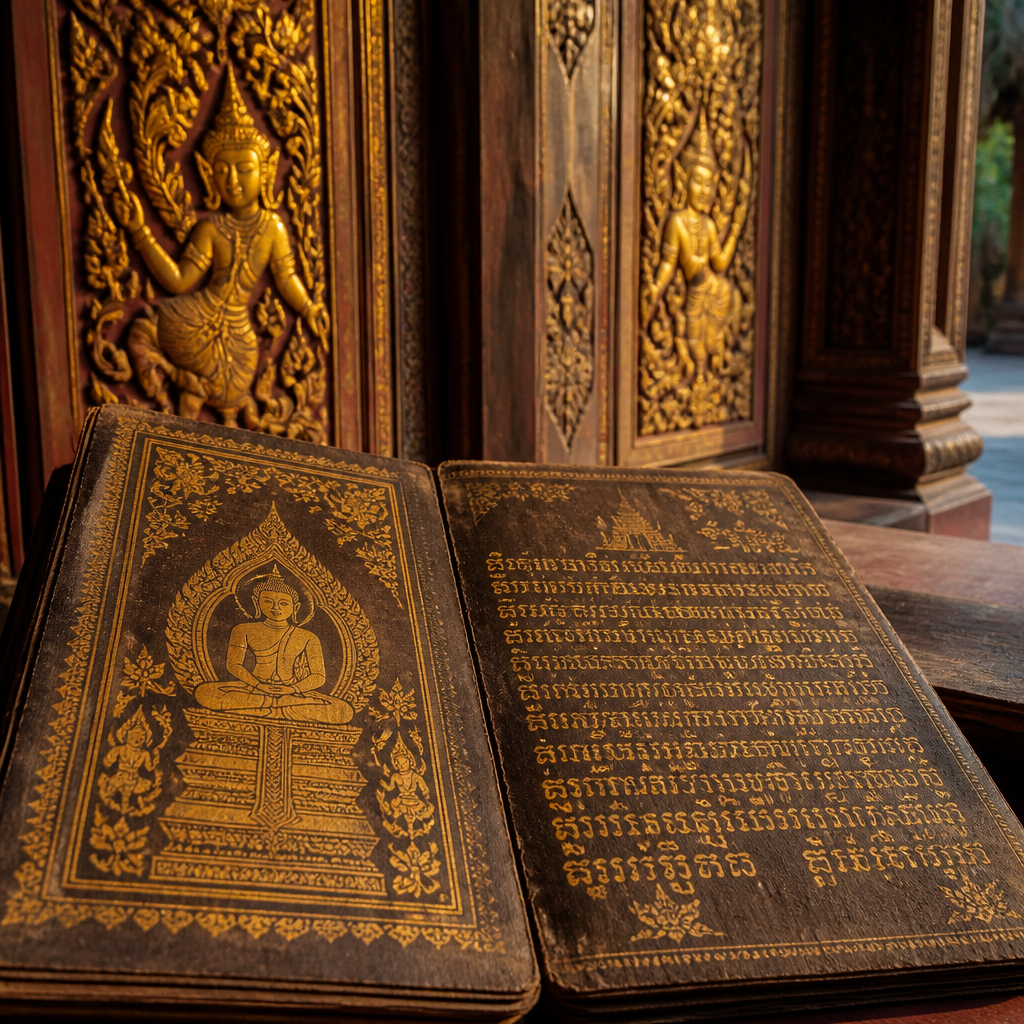
Theravada Buddhism, the dominant tradition in Thailand, is governed by a monastic code called the Vinaya. Written in the ancient Pali language, this code does not organize humanity into two genders. It names four: men, women, ubhatobyanjanaka, and pandaka. The word ubhatobyanjanaka combines "bhato" (twofold) and "byanjana" (gender), meaning literally "double-gendered," a category covering people with physical characteristics of both sexes. Pandaka is a more complex category associated with gender non-conformity and, in some interpretations, homosexual behavior.
This matters enormously for understanding how Thailand relates to kathoey. The existence of these categories inside the foundational religious text means that gender diversity is not a foreign import or a modern disruption. It is written into the architecture of Thai spiritual life. A visitor from a culture shaped by Abrahamic religion, where scripture generally enforces a binary, will not intuitively grasp how different this starting point is.
The Thai Buddhist term phet-thi-sam, often translated as "third gender," draws on this scriptural background. It positions kathoey identity within a cosmological system that has always acknowledged more than two genders. This is not the same as modern Western gender theory. It is older, more fatalistic, and shaped by concepts of rebirth and merit that most Western visitors have never seriously encountered.
"Buddhist teachings on impermanence, rebirth across lives, and karmic fate may all serve to encourage a person to act on a desire for gender transition. If all things are transient, why should gender be immutable within a lifetime?"
Karma, Past Lives, and the Buddhist Explanation for Kathoey
The most widely held popular explanation for why a person is born kathoey in Thai Buddhist culture is karmic consequence. Specifically, many Thai people believe a kathoey is living out the result of violating the Third Buddhist Precept, which prohibits sexual misconduct, in a previous life. The logic is straightforward within the karmic framework: you were a womanizer or a heartbreaker in your last life, and in this life you experience what it means to inhabit the position of the object of desire, a woman trapped in a man's body, sometimes described as forever subject to unrequited longing.


This framing has two important effects that visitors often miss. First, it creates genuine compassion. If a person is kathoey because of karmic debt, they are not threatening, immoral, or dangerous. They are paying a spiritual price. This is one real structural reason why Thai people rarely express the visceral hostility toward kathoey that visitors from some Western countries might expect. Second, and equally important, this framing also implies a hierarchy. Being kathoey is understood as a consequence of wrongdoing, not a spiritually neutral or positive state. The compassion is real but it coexists with the idea that being kathoey is a disadvantaged position in the cosmic order.
For a visitor, understanding this duality is essential. The Thai person who is warm and unbothered around a kathoey friend or colleague is not necessarily affirming the modern Western concept of transgender identity. They may be expressing Buddhist compassion toward someone carrying a spiritual burden. These are different things, and conflating them leads to misreadings of Thai social dynamics.
Pro tip: When Thai locals tell you "kathoey are just their karma," they are not being dismissive. They are placing the person inside a cosmological framework that, in their worldview, accounts for the full range of human variation. Engage with that seriously rather than rushing to correct it through a Western human-rights lens.
Tolerant Yet Unaccepting: The Real Social Position
The phrase that best captures the social reality of kathoey in Thailand was coined by researcher Peter A. Jackson: "tolerant yet unaccepting." Thai society acknowledges kathoey, rarely attacks them, and gives them significant cultural space, particularly in entertainment, beauty, and tourism. At the same time, it consistently stops short of full social equality.
Consider the concrete evidence of this gap. Kathoey in Thai television soap operas are regularly portrayed as comic figures, childish or absurd, not as complex adults deserving serious story arcs. None of the costs associated with gender-affirming care, including psychological counseling, hormone therapy, or surgery, are reimbursed under any of Thailand's three main public healthcare systems. Legal gender recognition on official documents remains inaccessible to kathoey, regardless of how long or completely they have transitioned.
Buddhism contributes directly to this dynamic. In principle, Buddhist teachings hold that earthly concerns, including gender and sexual identity, should be abandoned as attachments on the path to enlightenment. That sounds like a liberating position. In practice, the same tradition interprets non-normative gender as a marker of accumulated negative karma. The result is a society that does not hate kathoey but also does not fully invest in their flourishing.
Pro tip: Do not mistake the absence of overt hostility for full acceptance. When you engage with kathoey during your time in Thailand, be aware that the warmth and openness you receive in social settings can mask genuine structural inequality. Treating kathoey individuals with full dignity, not just polite tolerance, is noticed and appreciated far more than most visitors realize.

Monks, Ordination, and the Sangha's Position
The institutional face of Thai Buddhism, the Sangha Council, has taken a conservative position on kathoey identity that sits in tension with the more compassionate popular attitude. Some kathoey individuals have historically sought ordination as monks, registering under the gender assigned at birth. This practice became publicly controversial, and in 2009, the Thai Sangha Council, the governing body of the Buddhist order in Thailand, moved to restrict it.
The Vinaya's 227 rules for monks make frequent reference to the male-female distinction, and ancient Buddhist scriptures on gender transition almost exclusively describe a woman changing into a man in order to pursue enlightenment, not the other direction. This creates a scriptural gap that conservative interpreters have filled with exclusion.
For visitors, the significance of this is cultural, not just religious. The Sangha is one of the most respected institutions in Thailand. Monks carry enormous moral authority. When the Sangha takes a restrictive position on kathoey ordination, it sends a signal throughout Thai society about where kathoey stand in the spiritual hierarchy. The fact that some kathoey individuals have still pursued temple life regardless reflects the genuine personal faith many hold, and the resilience of their place within Thai Buddhist communities at the grassroots level, even when the institution is ambivalent.
What the Vinaya Actually Says
The Vinaya does not straightforwardly condemn kathoey. Some cases involving ubhatobyanjanaka and pandaka are treated tolerantly within the text, with those individuals treated no differently from other people in certain situations. The problem arises when historical Pali categories get translated through modern Thai into a context where "kathoey" carries meanings the original text never addressed. When pandaka gets read in Thailand as equivalent to "homosexual" or "kathoey," centuries-old scriptural judgments about one phenomenon get applied to a different and distinct one. This is a live interpretive dispute, not a settled doctrinal position.
Thai Religion, Gender Identity, and Daily Life
Away from doctrine and councils, Thai religion and gender identity interact in quieter, more personal ways that visitors encounter without always recognizing them. At temples, spirit houses, and in everyday merit-making, kathoey participate fully as Buddhists. Many are devout. The structure of Thai Buddhism, which emphasizes personal karma and individual practice, means there is no confession, no priest standing between a person and their spiritual life, and no institutional body policing whether they belong at a temple.
This gives kathoey a spiritual autonomy that is genuinely meaningful. A kathoey woman lighting incense at a Bangkok temple is not making a political statement. She is engaging in ordinary Thai Buddhist practice that is entirely available to her. The institutional ambivalence about ordination does not touch this daily dimension of religious life.
For visitors interested in genuine engagement with kathoey culture beyond nightlife, understanding this religious dimension opens important conversational territory. Asking thoughtfully about a person's relationship with Buddhism, merit, or family religious practice is far more likely to generate authentic connection than focusing entirely on gender or appearance. Many kathoey individuals hold nuanced personal theologies, navigating the karma-as-explanation framework in ways that are sometimes accepting, sometimes contested, and often both.
The Role of Family and Temple in Shaping Attitudes
Thai families are embedded in Buddhist practice through temple donations, religious ceremonies, and the merit system. A kathoey child in a Thai family is often loved within this Buddhist framework of compassion toward those carrying karmic burdens. That love is real. But it can also carry an implicit message: that the kathoey family member is someone to be pitied and supported rather than celebrated and affirmed. Visitors who spend real time in Thailand rather than just nightlife venues begin to notice this texture of affection-plus-limitation, and it makes the culture far more legible.
How Three Cultural Lenses Frame Kathoey Identity
Cultural Lens
Core Framework
Practical Effect on Kathoey
Thai Theravada Buddhism
Four genders in scripture; kathoey identity explained through karma and past-life sexual misconduct; compassion toward those carrying karmic debt
Widespread tolerance in social settings; participation in religious life; but institutional barriers to ordination and implicit hierarchy placing kathoey in a spiritually disadvantaged position
Western LGBTQ+ Framework
Gender identity as innate, politically protected, and deserving of full legal equality; binary systems seen as oppressive constructs
Frameworks of rights, affirmation, and legal recognition; risk of misreading Thai tolerance as equivalent Western-style acceptance when it operates on entirely different premises
Thai Popular and Entertainment Culture
Kathoey as a visible, commercially celebrated category; high representation in beauty, performance, and tourism industries
High social visibility and economic participation in specific sectors; persistent stereotyping in media; does not translate into full legal or healthcare equality
What This Means for You as a Visitor
The most common mistake visitors make is arriving with one of two flawed assumptions. Either they expect Thailand to be a Western-style trans-affirming paradise because kathoey are so visible, or they expect hostility because they assume religion means conservatism. Both miss the mark. What you are actually entering is a society shaped by a Buddhist cosmology that has always had conceptual room for gender diversity but has never resolved the tension between that openness and institutional hierarchy.
Practically, this means a few specific things. When someone explains kathoey identity to you using karma or past lives, engage with that explanation rather than replacing it with your own framework. It is not a euphemism for something more sophisticated. It is the actual belief system at work. When you visit a temple, know that a kathoey guide or companion is as entitled to be there as anyone, and no special awkwardness is warranted. When you discuss gender in Thailand with local people, the Buddhist concept of phet-thi-sam gives you a richer and more accurate entry point than Western terminology.
Understanding the Thailand third gender culture through its Buddhist foundations also makes you a more trustworthy presence to the kathoey individuals you meet. People notice when a visitor has made the effort to understand why Thailand is the way it is, not just what it looks like from the outside. That understanding is the foundation of real connection, which is presumably why you are here.
Frequently Asked Questions
Does Thai Buddhism approve of kathoey identity?
Thai Buddhism does not offer a single unified position. The Pali scriptures recognize more than two genders through the categories of ubhatobyanjanaka and pandaka, which creates textual space for gender diversity. However, popular Buddhist belief often frames kathoey identity as karmic consequence of past-life sexual misconduct, and the institutional Sangha Council has taken restrictive positions on kathoey ordination. The result is a tradition that neither fully condemns nor fully affirms, leaving significant interpretive space that individual Thais fill in different ways.
What does karma have to do with being kathoey in Thailand?
In Thai Buddhist popular belief, a person becomes kathoey because they accumulated negative karma through sexual misconduct, specifically breaking the Third Buddhist Precept, in a previous life. This karmic explanation is widely held and shapes the compassionate-but-pitying stance many Thai people take. The kathoey individual is seen as living out a spiritual consequence, not making a choice. This framing does not map onto Western concepts of gender identity but is essential to understanding Thai social attitudes.
Can kathoey become Buddhist monks in Thailand?
Some kathoey individuals have sought ordination as monks, registering under their birth-assigned sex. This practice is not without controversy. The Thai Sangha Council, the governing body of Thai Buddhism, moved to restrict such ordinations in 2009. Thai Buddhism follows the Theravada tradition, which maintains strict rules around monastic gender categories derived from the Vinaya code. Kathoey can and do practice Buddhism fully as laypeople, including regular temple participation and merit-making, even when monastic ordination remains contested.
Why are kathoey so visible in Thailand compared to other countries?
Several factors combine. Thai Buddhist culture creates a framework for gender diversity that predates Western categories, reducing the religious condemnation that drives invisibility in many other societies. The karmic explanation encourages compassion rather than hostility. Thai entertainment and tourism industries have actively incorporated kathoey performers and workers. And the concept of phet-thi-sam, third gender, gives kathoey a recognized social position rather than forcing them into hiding. Visibility, though, is not the same as equality, and the structural gaps in healthcare and legal recognition remain significant.
How should a visitor talk about kathoey identity in Thailand?
Lead with genuine curiosity about the Buddhist and cultural context rather than immediately applying Western LGBTQ+ terminology. The word kathoey is widely understood and used by kathoey individuals themselves, so it is not inherently offensive when used respectfully. Asking about someone's Buddhist practice, family relationships, or experience navigating Thai culture is more likely to generate real connection than focusing on gender terminology. Avoid assuming that Thai tolerance equals Western-style affirmation. The foundations are different, and recognizing that difference is a form of respect in itself.
Is the karma explanation for kathoey offensive?
Whether the karma explanation is experienced as offensive depends entirely on who is doing the explaining and in what spirit. Many kathoey individuals in Thailand have a complex personal relationship with this framework, some accepting it as their cultural inheritance, others actively contesting it. As a visitor, you should not deploy the karma explanation yourself as a way of categorizing someone. You should understand it as the cosmological context in which Thai people, including many kathoey, have formed their own identities. It is not your framework to apply; it is one you need to understand.
Have you encountered the Buddhist framing of kathoey identity during your time in Thailand, and did it change how you understood what you were seeing? Share your experience in the comments below.
References
UC Davis prized writing: Buddhist beliefs, karma, and kathoey in Thai society
Sakonnakhon cultural guide: kathoey, the Third Precept, and Buddhist acceptance in Thailand
The Conversation: Buddhist teachings, LGBTQ monastics, and the Thai Sangha Council's 2009 ruling
Thailand Blog: kathoey in Thai society, tolerance without full acceptance, and the Buddhist view
Comments